Measure the current state of affairs of your PMO!
The PMO Monitor – the annual developments & trends measurement -
The PMO Monitor tracks the most important aspects regarding the deployment, scope of application, results, and requirements of PMOs in the Netherlands. The goal of the monitor is to monitor trends and developments so that PMO professionals know how to develop and understand the value of a PMO. Ultimately, we also hope to provide insight into the savings a PMO can realize through a higher project success rate, better quality project results, and greater control.
Measurement of PMO maturity
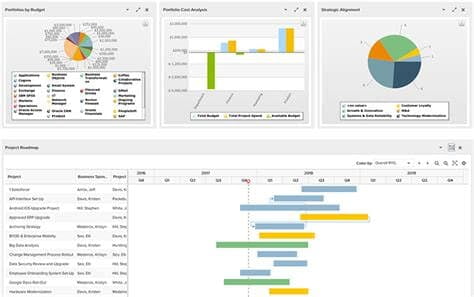
To provide some insight into which results are achieved at which levels, it is first and foremost important to establish a benchmark of the professional level of the PMO. For this purpose, we will use a PMO Maturity Model. Or perhaps a PM maturity model, possibly taking into account the type of projects (strategic, product development, IT, business transformation, Continuous Improvement, etc.).
Subsequent research questions, such as the success rate of projects within the organization, can then be compared against the maturity of the PMO.
Insight into methodologies
Whereas projects were organized based on a waterfall model 10 years ago, the situation is now much more diffuse. Agile and hybrid project organizations are the norm these days. Is there a difference when one methodology is applied compared to the other? And can anything be said about the success of a methodology compared to another? What preconditions make a methodology more successful?
Additionally, projects are increasingly focusing on value (Value Streams) and the actual results of the projects within the organization (Benefits). Can this be included in this research?
Research questions that can establish this accurately and scientifically will need to be further developed to allow the PMO monitor to have extra impact. We understand that there is no one-size-fits-all approach, but it will primarily involve applying the right preconditions to ensure an approach becomes successful. What are these preconditions?
Scope of the PMO
Will much change in the coming years regarding the activities and breadth of the PMO's responsibilities? Whereas previously a single PMO Manager managed the resource pool and set the standards themselves, nowadays we see that the PMO manages the PM resources much less directly, but is all the more responsible for the 'HOW' projects must be requested, phased, and executed: templates, reports, and dashboards.
How will this develop further? A multiple-choice questionnaire will need to be established to clearly elicit the various tasks and responsibilities. A center of gravity must be determined to assess whether this center of gravity will shift in the coming years.
Tooling within the PMO and data management
About 20 years ago, eProject began its rise to assign simple tasks online to project team members who received a notification and later another notification when the task expired. Genius in its simplicity! Competitors quickly followed, see the footnote[1], and investors threw a lot of money at it. Understandably so, as more control over projects and less work creating reports was high on the PMO's wish list.
However, we observed that only larger organizations deployed this tooling on a larger scale. Was the business case not sound? Or was the guidance during the implementation (the change management) not handled well? Nowadays, tools like Jira, Microsoft Tasks, and Trello are widely used. But capacity planning, portfolio management, etc., are not easily possible with them. Is that a drawback? Could better results be achieved if such tools were available? Could better choices be made regarding which projects are more important to the organization?
The PMO Monitor determines the business case of Project Tooling and, in general, the impact on the speed of execution, the amount of administrative work in projects, and project success. Is a Return on Investment (ROI) rate determinable? Also interesting is the question of whether communication in projects improves due to the collaboration function of the tooling and whether the 'single source of truth' supports finding data as well as moving towards more data-driven management.
Finally, tooling is likely the enabler for the use of AI in projects. The tooling has the data on which AI can perform its tricks! To what extent is this already being used?
The PMO and skills of the PM organization
Finally, the PMO Monitor focuses on soft skills, the skills of PMO managers, and project professionals in general. There is a clear trend—partly supported by the increasing availability of data for decision-making and partly driven by increasingly complex projects with multiple stakeholders and suppliers—indicating that the development of project professionals requires far more social skills than ever before. Leadership based on a growth mindset, emotional intelligence, and generally good business knowledge are more important than a thorough understanding of Prince2.
The PMO Monitor will describe and track these changes and the development of the Project Manager and Project Management Officer personas. Naturally, the IPMA International Competence Base (ICB) is used, but do we see a need to refine it? What further elements do we want to record? Which training courses are relevant for the next steps in the PMO career? Can the PMO develop ' Change Makers '[2] so that project results are easily and more widely adopted within the organization?
The development and distribution of the PMO Monitor is facilitated by The PMO Company in close consultation with the PMO Community of IPMA and PMI. If you are interested in being involved in the development and maintenance, please sign up below. If you are interested in using the PMO Monitor for the current state of affairs in your PMO, or if you wish to track the development of your PMO over the years, please also sign up via the short form.
[1] https://venturebeat.com/business/eproject-becomes-daptiv-aims-to-take-over-ppm-market/
[2] Ui PMI’s PMI 4.0 study: Gymnastic enterprises lead the way by creating changemakers—those who, regardless of their role, feel personally inspired and equipped to turn ideas into reality.